
China Factory Guide
 0 comment
 01 Nov, 2026
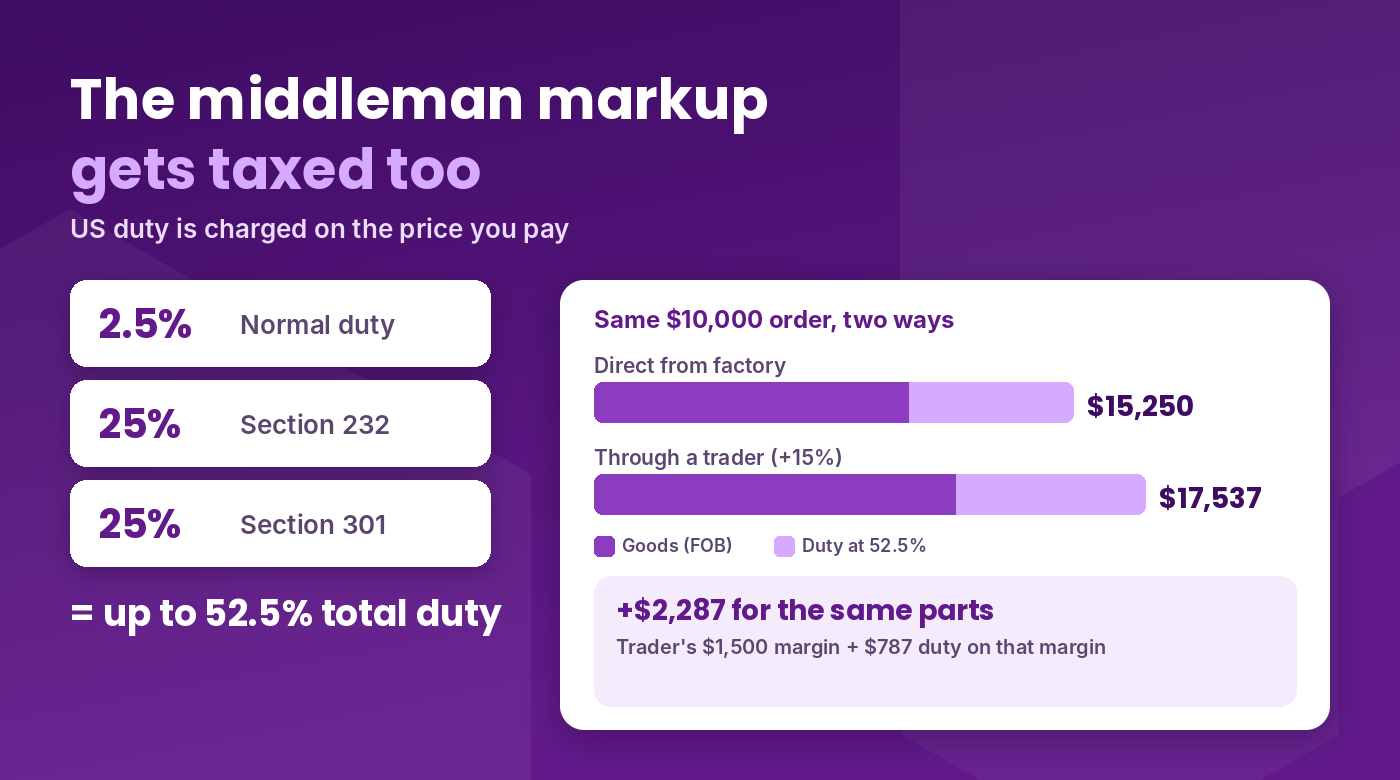
Many auto parts imported from China into the US now carry about 50% in extra duty: 25% under Section 232 and another 25% under Section 301. At that rate, every dollar a trading company adds to the price is taxed again at the border.
That changes the math for US importers. A 15% middleman markup used to cost you 15%. With a 50% duty on top, the same markup costs you about 23%, because customs charges duty on the price you actually paid. Buying straight from the factory removes the markup and the duty on it.
This guide covers the tariffs in force as of November 2026, a worked landed-cost example, and the legal ways to keep your duty bill down. It is general information, not legal or customs advice: check your exact HTS codes with a licensed customs broker.
Three layers of duty still apply to most Chinese auto parts in late 2026. The emergency (IEEPA) tariffs from 2025 are gone.
| Layer | Rate | Applies to | Status (Nov 2026) |
|---|---|---|---|
| Normal (MFN) duty | 2.5% for most parts in HTS 8708 | All countries | In force |
| Section 232 | 25% | Listed auto parts (engines, transmissions, powertrain, electrical and more) from all countries, since May 3, 2025 | In force |
| Section 301 | 25% on most auto parts lists | Goods made in China | In force, stacks on Section 232 |
| IEEPA "reciprocal" and "fentanyl" tariffs | Varied | China and other countries | Struck down by the Supreme Court on February 20, 2026 |
| Section 122 | 10% | Most imports | Ran February 24 to July 24, 2026; never applied to goods under Section 232 |
What this means: a Chinese part that is on both the Section 232 and Section 301 lists pays roughly 52.5% in total (2.5% + 25% + 25%). A part on the Section 301 list only pays about 27.5%. Your exact rate depends on the HTS code, so confirm it with your broker before you order.
Refunds: if you paid IEEPA tariffs in 2025 or early 2026, the ruling did not say how refunds work. Importers may need to file protests or claims, so talk to your broker.
US customs charges duty on the transaction value: the price you pay your seller for the goods. International freight and insurance are left out of that value. So when a trading company adds its margin, the duty grows with it.
Example: the same order of brake parts, bought two ways, with a 52.5% total duty rate.
| Direct from factory | Through a trading company (+15%) | |
|---|---|---|
| Price paid for goods (FOB) | $10,000 | $11,500 |
| Duty at 52.5% | $5,250 | $6,037.50 |
| Goods + duty | $15,250 | $17,537.50 |
| Extra cost vs. direct | - | $2,287.50 (+15%) |
The trader's $1,500 margin ends up costing you $2,287.50. The extra $787.50 is duty paid on the markup itself. Freight, broker fees and the harbor and merchandise processing fees come on top in both cases.
The gap grows with the markup. A trader who adds 25% costs you about $3,800 more on the same $10,000 order.
For many parts it is about 52.5% in total: 2.5% normal duty, 25% Section 232 and 25% Section 301. Parts not on the Section 232 list pay about 27.5%.
No. The Supreme Court ruled on February 20, 2026 that IEEPA does not allow the President to set tariffs. Section 232 and Section 301 duties were not affected.
Yes. US duty is charged on the price you pay for the goods, so a higher price means higher duty.
Not if the part was made in China. Country of origin is where the part was made, and transshipment to hide origin is illegal.
It is when you verify the factory first: license, address, product photos and direct contacts, then a sample order.
China Factory Guide lists 1,200+ verified Chinese auto parts and motorcycle parts manufacturers, most of them in Wenzhou. Each listing has product photos, company name, full address, phone, email and WeChat, so you can contact the factory directly. Access is lifetime and updated every year.


China Factory Guide
0 comment